 ReadingSync
Immerse in Classic Audiobooks, then Master English
Thousands of timeless Project Gutenberg masterpieces — 100% free and completely ad-free! Experience LibriVox audio with word-by-word synchronized text, bilingual lookup, and an SRS vocabulary trainer.
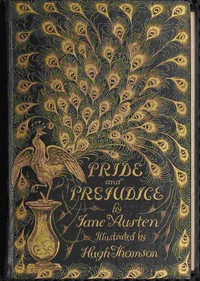
Pride and Prejudice
播放清單 (點選曲目即可播放)
Origin Of Species by Means of Natural Selection (version 2) — Chapter 5 Part 2 - Laws Of Variation. (continued)
_Distinct Species present analogous Variations, so that a Variety of one Species often assumes a Character Proper to an allied Species, or reverts to some of the Characters of an early Progenitor.
_—These propositions will be most readily understood by looking to our domestic races.
The most distinct breeds of the pigeon, in countries widely apart, present sub-varieties with reversed feathers on the head, and with feathers on the feet, characters not possessed by the aboriginal rock-pigeon; these then are analogous variations in two or more distinct races.
The frequent presence of fourteen or even sixteen tail-feathers in the pouter may be considered as a variation representing the normal structure of another race, the fantail.
I
presume that no one will doubt that all such analogous variations are due to the several races of the pigeon having inherited from a common parent the same constitution and tendency to variation, when acted on by similar unknown influences.
In the vegetable kingdom we have a case of analogous variation, in the enlarged stems, or as commonly called roots, of the Swedish turnip and ruta-baga, plants which several botanists rank as varieties produced by cultivation from a common parent: if this be not so, the case will then be one of analogous variation in two so-called distinct species; and to these a third may be added, namely, the common turnip.
According to the ordinary view of each species having been independently created, we should have to attribute this similarity in the enlarged stems of these three plants, not to the vera causa of community of descent, and a consequent tendency to vary in a like manner, but to three separate yet closely related acts of creation.
Many similar cases of analogous variation have been observed by Naudin in the great gourd family, and by various authors in our cereals.
Similar cases occurring with insects under natural conditions have lately been discussed with much ability by Mr. Walsh, who has grouped them under his law of equable variability.
With pigeons, however, we have another case, namely, the occasional appearance in all the breeds, of slaty-blue birds with two black bars on the wings, white loins, a bar at the end of the tail, with the outer feathers externally edged near their bases with white.
As all these marks are characteristic of the parent rock-pigeon, I presume that no one will doubt that this is a case of reversion, and not of a new yet analogous variation appearing in the several breeds.
We may, I think, confidently come to this conclusion, because, as we have seen, these coloured marks are eminently liable to appear in the crossed offspring of two distinct and differently coloured breeds; and in this case there is nothing in the external conditions of life to cause the reappearance of the slaty-blue, with the several marks, beyond the influence of the mere act of crossing on the laws of inheritance.
No doubt it is a very surprising fact that characters should reappear after having been lost for many, probably for hundreds of generations.
But when a breed has been crossed only once by some other breed, the offspring occasionally show for many generations a tendency to revert in character to the foreign breed—some say, for a dozen or even a score of generations.
After twelve generations, the proportion of blood, to use a common expression, from one ancestor, is only 1 in 2048; and yet, as we see, it is generally believed that a tendency to reversion is retained by this remnant of foreign blood.
In a breed which has not been crossed, but in which _both_ parents have lost some character which their progenitor possessed, the tendency, whether strong or weak, to reproduce the lost character might, as was formerly remarked, for all that we can see to the contrary, be transmitted for almost any number of generations.
When a character which has been lost in a breed, reappears after a great number of generations, the most probable hypothesis is, not that one individual suddenly takes after an ancestor removed by some hundred generations, but that in each successive generation the character in question has been lying latent, and at last, under unknown favourable conditions, is developed.
With the barb-pigeon, for instance, which very rarely produces a blue bird, it is probable that there is a latent tendency in each generation to produce blue plumage.
The abstract improbability of such a tendency being transmitted through a vast number of generations, is not greater than that of quite useless or rudimentary organs being similarly transmitted.
A mere tendency to produce a rudiment is indeed sometimes thus inherited.
As all the species of the same genus are supposed to be descended from a common progenitor, it might be expected that they would occasionally vary in an analogous manner; so that the varieties of two or more species would resemble each other, or that a variety of one species would resemble in certain characters another and distinct species, this other species being, according to our view, only a well-marked and permanent variety.
But characters exclusively due to analogous variation would probably be of an unimportant nature, for the preservation of all functionally important characters will have been determined through natural selection, in accordance with the different habits of the species.
It might further be expected that the species of the same genus would occasionally exhibit reversions to long-lost characters.
As, however, we do not know the common ancestor of any natural group, we cannot distinguish between reversionary and analogous characters.
If, for instance, we did not know that the parent rock-pigeon was not feather-footed or turn-crowned, we could not have told, whether such characters in our domestic breeds were reversions or only analogous variations; but we might have inferred that the blue colour was a case of reversion from the number of the markings, which are correlated with this tint, and which would not probably have all appeared together from simple variation.
More especially we might have inferred this from the blue colour and the several marks so often appearing when differently coloured breeds are crossed.
Hence, although under nature it must generally be left doubtful, what cases are reversions to formerly existing characters, and what are new but analogous variations, yet we ought, on our theory, sometimes to find the varying offspring of a species assuming characters which are already present in other members of the same group.
And this undoubtedly is the case.
The difficulty in distinguishing variable species is largely due to the varieties mocking, as it were, other species of the same genus.
A
considerable catalogue, also, could be given of forms intermediate between two other forms, which themselves can only doubtfully be ranked as species; and this shows, unless all these closely allied forms be considered as independently created species, that they have in varying assumed some of the characters of the others.
But the best evidence of analogous variations is afforded by parts or organs which are generally constant in character, but which occasionally vary so as to resemble, in some degree, the same part or organ in an allied species.
I have collected a long list of such cases; but here, as before, I lie under the great disadvantage of not being able to give them.
I can only repeat that such cases certainly occur, and seem to me very remarkable.
I will, however, give one curious and complex case, not indeed as affecting any important character, but from occurring in several species of the same genus, partly under domestication and partly under nature.
It is a case almost certainly of reversion.
The ass sometimes has very distinct transverse bars on its legs, like those on the legs of a zebra.
It has been asserted that these are plainest in the foal, and from inquiries which I have made, I believe this to be true.
The stripe on the shoulder is sometimes double, and is very variable in length and outline.
A white ass, but _not_ an albino, has been described without either spinal or shoulder stripe; and these stripes are sometimes very obscure, or actually quite lost, in dark-coloured asses.
The koulan of Pallas is said to have been seen with a double shoulder-stripe.
Mr. Blyth has seen a specimen of the hemionus with a distinct shoulder-stripe, though it properly has none; and I have been informed by Colonel Poole that foals of this species are generally striped on the legs and faintly on the shoulder.
The quagga, though so plainly barred like a zebra over the body, is without bars on the legs;
but Dr. Gray has figured one specimen with very distinct zebra-like bars on the hocks.
With respect to the horse, I have collected cases in England of the spinal stripe in horses of the most distinct breeds, and of _all_ colours; transverse bars on the legs are not rare in duns, mouse-duns, and in one instance in a chestnut; a faint shoulder-stripe may sometimes be seen in duns, and I have seen a trace in a bay horse.
My son made a careful examination and sketch for me of a dun Belgian cart-horse with a double stripe on each shoulder and with leg-stripes.
I have myself seen a dun Devonshire pony, and a small dun Welsh pony has been carefully described to me, both with _three_ parallel stripes on each shoulder.
In the northwest part of India the Kattywar breed of horses is so generally striped, that, as I hear from Colonel Poole, who examined this breed for the Indian Government, a horse without stripes is not considered as purely bred.
The spine is always striped; the legs are generally barred; and the shoulder-stripe, which is sometimes double and sometimes treble, is common; the side of the face, moreover, is sometimes striped.
The stripes are often plainest in the foal; and sometimes quite disappear in old horses.
Colonel Poole has seen both gray and bay Kattywar horses striped when first foaled.
I have also reason to suspect, from information given me by Mr. W.
W.
Edwards, that with the English race-horse the spinal stripe is much commoner in the foal than in the full-grown animal.
I have myself recently bred a foal from a bay mare (offspring of a Turkoman horse and a Flemish mare) by a bay English race-horse.
This foal, when a week old, was marked on its hinder quarters and on its forehead with numerous very narrow, dark, zebra-like bars, and its legs were feebly striped.
All the stripes soon disappeared completely.
Without here entering on further details I may state that I have collected cases of leg and shoulder stripes in horses of very different breeds in various countries from Britain to Eastern China; and from Norway in the north to the Malay Archipelago in the south.
In all parts of the world these stripes occur far oftenest in duns and mouse-duns; by the term dun a large range of colour is included, from one between brown and black to a close approach to cream colour.
I am aware that Colonel Hamilton Smith, who has written on this subject, believes that the several breeds of the horse are descended from several aboriginal species, one of which, the dun, was striped;
and that the above-described appearances are all due to ancient crosses with the dun stock.
But this view may be safely rejected, for it is highly improbable that the heavy Belgian cart-horse, Welsh ponies, Norwegian cobs, the lanky Kattywar race, &c. , inhabiting the most distant parts of the world, should have all have been crossed with one supposed aboriginal stock.
Now let us turn to the effects of crossing the several species of the horse genus.
Rollin asserts that the common mule from the ass and horse is particularly apt to have bars on its legs; according to Mr. Gosse, in certain parts of the United States, about nine out of ten mules have striped legs.
I once saw a mule with its legs so much striped that any one might have thought that it was a hybrid zebra; and Mr. W.
C.
Martin, in his excellent treatise on the horse, has given a figure of a similar mule.
In four coloured drawings, which I have seen, of hybrids between the ass and zebra, the legs were much more plainly barred than the rest of the body; and in one of them there was a double shoulder-stripe.
In Lord Morton’s famous hybrid, from a chestnut mare and male quagga, the hybrid and even the pure offspring subsequently produced from the same mare by a black Arabian sire, were much more plainly barred across the legs than is even the pure quagga.
Lastly, and this is another most remarkable case, a hybrid has been figured by Dr. Gray (and he informs me that he knows of a second case) from the ass and the hemionus; and this hybrid, though the ass only occasionally has stripes on his legs and the hemionus has none and has not even a shoulder-stripe, nevertheless had all four legs barred, and had three short shoulder-stripes, like those on the dun Devonshire and Welsh ponies, and even had some zebra-like stripes on the sides of its face.
With respect to this last fact, I was so convinced that not even a stripe of colour appears from what is commonly called chance, that I was led solely from the occurrence of the face-stripes on this hybrid from the ass and hemionus to ask Colonel Poole whether such face-stripes ever occurred in the eminently striped Kattywar breed of horses, and was, as we have seen, answered in the affirmative.
What now are we to say to these several facts?
We see several distinct species of the horse genus becoming, by simple variation, striped on the legs like a zebra, or striped on the shoulders like an ass.
In the horse we see this tendency strong whenever a dun tint appears—a tint which approaches to that of the general colouring of the other species of the genus.
The appearance of the stripes is not accompanied by any change of form, or by any other new character.
We see this tendency to become striped most strongly displayed in hybrids from between several of the most distinct species.
Now observe the case of the several breeds of pigeons: they are descended from a pigeon (including two or three sub-species or geographical races) of a bluish colour, with certain bars and other marks; and when any breed assumes by simple variation a bluish tint, these bars and other marks invariably reappear; but without any other change of form or character.
When the oldest and truest breeds of various colours are crossed, we see a strong tendency for the blue tint and bars and marks to reappear in the mongrels.
I have stated that the most probable hypothesis to account for the reappearance of very ancient characters, is—that there is a _tendency_ in the young of each successive generation to produce the long-lost character, and that this tendency, from unknown causes, sometimes prevails.
And we have just seen that in several species of the horse genus the stripes are either plainer or appear more commonly in the young than in the old.
Call the breeds of pigeons, some of which have bred true for centuries, species; and how exactly parallel is the case with that of the species of the horse genus!
For myself, I venture confidently to look back thousands on thousands of generations, and I see an animal striped like a zebra, but perhaps otherwise very differently constructed, the common parent of our domestic horse (whether or not it be descended from one or more wild stocks) of the ass, the hemionus, quagga, and zebra.
He who believes that each equine species was independently created, will, I presume, assert that each species has been created with a tendency to vary, both under nature and under domestication, in this particular manner, so as often to become striped like the other species of the genus; and that each has been created with a strong tendency, when crossed with species inhabiting distant quarters of the world, to produce hybrids resembling in their stripes, not their own parents, but other species of the genus.
To admit this view is, as it seems to me, to reject a real for an unreal, or at least for an unknown cause.
It makes the works of God a mere mockery and deception; I would almost as soon believe with the old and ignorant cosmogonists, that fossil shells had never lived, but had been created in stone so as to mock the shells now living on the sea-shore.
_Summary.
_—Our ignorance of the laws of variation is profound.
Not in one case out of a hundred can we pretend to assign any reason why this or that part has varied.
But whenever we have the means of instituting a comparison, the same laws appear to have acted in producing the lesser differences between varieties of the same species, and the greater differences between species of the same genus.
Changed conditions generally induce mere fluctuating variability, but sometimes they cause direct and definite effects; and these may become strongly marked in the course of time, though we have not sufficient evidence on this head.
Habit in producing constitutional peculiarities, and use in strengthening, and disuse in weakening and diminishing organs, appear in many cases to have been potent in their effects.
Homologous parts tend to vary in the same manner, and homologous parts tend to cohere.
Modifications in hard parts and in external parts sometimes affect softer and internal parts.
When one part is largely developed, perhaps it tends to draw nourishment from the adjoining parts; and every part of the structure which can be saved without detriment will be saved.
Changes of structure at an early age may affect parts subsequently developed; and many cases of correlated variation, the nature of which we are unable to understand, undoubtedly occur.
Multiple parts are variable in number and in structure, perhaps arising from such parts not having been closely specialised for any particular function, so that their modifications have not been closely checked by natural selection.
It follows probably from this same cause, that organic beings low in the scale are more variable than those standing higher in the scale, and which have their whole organisation more specialised.
Rudimentary organs, from being useless, are not regulated by natural selection, and hence are variable.
Specific characters—that is, the characters which have come to differ since the several species of the same genus branched off from a common parent—are more variable than generic characters, or those which have long been inherited, and have not differed within this same period.
In these remarks we have referred to special parts or organs being still variable, because they have recently varied and thus come to differ; but we have also seen in the second chapter that the same principle applies to the whole individual;
for in a district where many species of a genus are found—that is, where there has been much former variation and differentiation, or where the manufactory of new specific forms has been actively at work—in that district and among these species, we now find, on an average, most varieties.
Secondary sexual characters are highly variable, and such characters differ much in the species of the same group.
Variability in the same parts of the organisation has generally been taken advantage of in giving secondary sexual differences to the two sexes of the same species, and specific differences to the several species of the same genus.
Any part or organ developed to an extraordinary size or in an extraordinary manner, in comparison with the same part or organ in the allied species, must have gone through an extraordinary amount of modification since the genus arose; and thus we can understand why it should often still be variable in a much higher degree than other parts; for variation is a long-continued and slow process, and natural selection will in such cases not as yet have had time to overcome the tendency to further variability and to reversion to a less modified state.
But when a species with an extraordinarily developed organ has become the parent of many modified descendants—which on our view must be a very slow process, requiring a long lapse of time—in this case, natural selection has succeeded in giving a fixed character to the organ, in however extraordinary a manner it may have been developed.
Species inheriting nearly the same constitution from a common parent, and exposed to similar influences, naturally tend to present analogous variations, or these same species may occasionally revert to some of the characters of their ancient progenitors.
Although new and important modifications may not arise from reversion and analogous variation, such modifications will add to the beautiful and harmonious diversity of nature.
Whatever the cause may be of each slight difference between the offspring and their parents—and a cause for each must exist—we have reason to believe that it is the steady accumulation of beneficial differences which has given rise to all the more important modifications of structure in relation to the habits of each species.
CHAPTER VI. DIFFICULTIES OF THE THEORY.
Difficulties of the theory of descent with modification—Absence or rarity of transitional varieties—Transitions in habits of life—Diversified habits in the same species—Species with habits widely different from those of their allies—Organs of extreme perfection—Modes of transition—Cases of difficulty—Natura non facit saltum—Organs of small importance—Organs not in all cases absolutely perfect—The law of Unity of Type and of the Conditions of Existence embraced by the theory of Natural Selection.
Long before the reader has arrived at this part of my work, a crowd of difficulties will have occurred to him.
Some of them are so serious that to this day I can hardly reflect on them without being in some degree staggered; but, to the best of my judgment, the greater number are only apparent, and those that are real are not, I think, fatal to the theory.
These difficulties and objections may be classed under the following heads: First, why, if species have descended from other species by fine gradations, do we not everywhere see innumerable transitional forms?
Why is not all nature in confusion, instead of the species being, as we see them, well defined?
Secondly, is it possible that an animal having, for instance, the structure and habits of a bat, could have been formed by the modification of some other animal with widely different habits and structure?
Can we believe that natural selection could produce, on the one hand, an organ of trifling importance, such as the tail of a giraffe, which serves as a fly-flapper, and, on the other hand, an organ so wonderful as the eye?
Thirdly, can instincts be acquired and modified through natural selection?
What shall we say to the instinct which leads the bee to make cells, and which has practically anticipated the discoveries of profound mathematicians?
Fourthly, how can we account for species, when crossed, being sterile and producing sterile offspring, whereas, when varieties are crossed, their fertility is unimpaired?
The two first heads will be here discussed; some miscellaneous objections in the following chapter; Instinct and Hybridism in the two succeeding chapters.
_On the Absence or Rarity of Transitional Varieties.
_—As natural selection acts solely by the preservation of profitable modifications, each new form will tend in a fully-stocked country to take the place of, and finally to exterminate, its own less improved parent-form and other less-favoured forms with which it comes into competition.
Thus extinction and natural selection go hand in hand.
Hence, if we look at each species as descended from some unknown form, both the parent and all the transitional varieties will generally have been exterminated by the very process of the formation and perfection of the new form.
But, as by this theory innumerable transitional forms must have existed, why do we not find them embedded in countless numbers in the crust of the earth?
It will be more convenient to discuss this question in the chapter on the imperfection of the geological record; and I will here only state that I believe the answer mainly lies in the record being incomparably less perfect than is generally supposed.
The crust of the earth is a vast museum; but the natural collections have been imperfectly made, and only at long intervals of time.
But it may be urged that when several closely allied species inhabit the same territory, we surely ought to find at the present time many transitional forms.
Let us take a simple case: in travelling from north to south over a continent, we generally meet at successive intervals with closely allied or representative species, evidently filling nearly the same place in the natural economy of the land.
These representative species often meet and interlock; and as the one becomes rarer and rarer, the other becomes more and more frequent, till the one replaces the other.
But if we compare these species where they intermingle, they are generally as absolutely distinct from each other in every detail of structure as are specimens taken from the metropolis inhabited by each.
By my theory these allied species are descended from a common parent;
and during the process of modification, each has become adapted to the conditions of life of its own region, and has supplanted and exterminated its original parent-form and all the transitional varieties between its past and present states.
Hence we ought not to expect at the present time to meet with numerous transitional varieties in each region, though they must have existed there, and may be embedded there in a fossil condition.
But in the intermediate region, having intermediate conditions of life, why do we not now find closely-linking intermediate varieties?
This difficulty for a long time quite confounded me.
But I think it can be in large part explained.
In the first place we should be extremely cautious in inferring, because an area is now continuous, that it has been continuous during a long period.
Geology would lead us to believe that most continents have been broken up into islands even during the later tertiary periods; and in such islands distinct species might have been separately formed without the possibility of intermediate varieties existing in the intermediate zones.
By changes in the form of the land and of climate, marine areas now continuous must often have existed within recent times in a far less continuous and uniform condition than at present.
But I will pass over this way of escaping from the difficulty; for I believe that many perfectly defined species have been formed on strictly continuous areas; though I do not doubt that the formerly broken condition of areas now continuous, has played an important part in the formation of new species, more especially with freely-crossing and wandering animals.
In looking at species as they are now distributed over a wide area, we generally find them tolerably numerous over a large territory, then becoming somewhat abruptly rarer and rarer on the confines, and finally disappearing.
Hence the neutral territory between two representative species is generally narrow in comparison with the territory proper to each.
We see the same fact in ascending mountains, and sometimes it is quite remarkable how abruptly, as Alph.
De Candolle has observed, a common alpine species disappears.
The same fact has been noticed by E. Forbes in sounding the depths of the sea with the dredge.
To those who look at climate and the physical conditions of life as the all-important elements of distribution, these facts ought to cause surprise, as climate and height or depth graduate away insensibly.
But when we bear in mind that almost every species, even in its metropolis, would increase immensely in numbers, were it not for other competing species; that nearly all either prey on or serve as prey for others; in short, that each organic being is either directly or indirectly related in the most important manner to other organic beings—we see that the range of the inhabitants of any country by no means exclusively depends on insensibly changing physical conditions, but in large part on the presence of other species, on which it lives, or by which it is destroyed, or with which it comes into competition; and as these species are already defined objects, not blending one into another by insensible gradations, the range of any one species, depending as it does on the range of others, will tend to be sharply defined.
Moreover, each species on the confines of its range, where it exists in lessened numbers, will, during fluctuations in the number of its enemies or of its prey, or in the nature of the seasons, be extremely liable to utter extermination; and thus its geographical range will come to be still more sharply defined.
As allied or representative species, when inhabiting a continuous area, are generally distributed in such a manner that each has a wide range, with a comparatively narrow neutral territory between them, in which they become rather suddenly rarer and rarer; then, as varieties do not essentially differ from species, the same rule will probably apply to both; and if we take a varying species inhabiting a very large area, we shall have to adapt two varieties to two large areas, and a third variety to a narrow intermediate zone.
The intermediate variety, consequently, will exist in lesser numbers from inhabiting a narrow and lesser area; and practically, as far as I can make out, this rule holds good with varieties in a state of nature.
I have met with striking instances of the rule in the case of varieties intermediate between well-marked varieties in the genus Balanus.
And it would appear from information given me by Mr. Watson, Dr. Asa Gray, and Mr. Wollaston, that generally, when varieties intermediate between two other forms occur, they are much rarer numerically than the forms which they connect.
Now, if we may trust these facts and inferences, and conclude that varieties linking two other varieties together generally have existed in lesser numbers than the forms which they connect, then we can understand why intermediate varieties should not endure for very long periods: why, as a general rule, they should be exterminated and disappear, sooner than the forms which they originally linked together.
For any form existing in lesser numbers would, as already remarked, run a greater chance of being exterminated than one existing in large numbers; and in this particular case the intermediate form would be eminently liable to the inroads of closely allied forms existing on both sides of it.
But it is a far more important consideration, that during the process of further modification, by which two varieties are supposed to be converted and perfected into two distinct species, the two which exist in larger numbers, from inhabiting larger areas, will have a great advantage over the intermediate variety, which exists in smaller numbers in a narrow and intermediate zone.
For forms existing in larger numbers will have a better chance, within any given period, of presenting further favourable variations for natural selection to seize on, than will the rarer forms which exist in lesser numbers.
Hence, the more common forms, in the race for life, will tend to beat and supplant the less common forms, for these will be more slowly modified and improved.
It is the same principle which, as I believe, accounts for the common species in each country, as shown in the second chapter, presenting on an average a greater number of well-marked varieties than do the rarer species.
I may illustrate what I mean by supposing three varieties of sheep to be kept, one adapted to an extensive mountainous region; a second to a comparatively narrow, hilly tract; and a third to the wide plains at the base; and that the inhabitants are all trying with equal steadiness and skill to improve their stocks by selection; the chances in this case will be strongly in favour of the great holders on the mountains or on the plains improving their breeds more quickly than the small holders on the intermediate narrow, hilly tract; and consequently the improved mountain or plain breed will soon take the place of the less improved hill breed; and thus the two breeds, which originally existed in greater numbers, will come into close contact with each other, without the interposition of the supplanted, intermediate hill variety.
To sum up, I believe that species come to be tolerably well-defined objects, and do not at any one period present an inextricable chaos of varying and intermediate links: first, because new varieties are very slowly formed, for variation is a slow process, and natural selection can do nothing until favourable individual differences or variations occur, and until a place in the natural polity of the country can be better filled by some modification of some one or more of its inhabitants.
And such new places will depend on slow changes of climate, or on the occasional immigration of new inhabitants, and, probably, in a still more important degree, on some of the old inhabitants becoming slowly modified, with the new forms thus produced and the old ones acting and reacting on each other.
So that, in any one region and at any one time, we ought to see only a few species presenting slight modifications of structure in some degree permanent;
and this assuredly we do see.
Secondly, areas now continuous must often have existed within the recent period as isolated portions, in which many forms, more especially among the classes which unite for each birth and wander much, may have separately been rendered sufficiently distinct to rank as representative species.
In this case, intermediate varieties between the several representative species and their common parent, must formerly have existed within each isolated portion of the land, but these links during the process of natural selection will have been supplanted and exterminated, so that they will no longer be found in a living state.
Thirdly, when two or more varieties have been formed in different portions of a strictly continuous area, intermediate varieties will, it is probable, at first have been formed in the intermediate zones, but they will generally have had a short duration.
For these intermediate varieties will, from reasons already assigned (namely from what we know of the actual distribution of closely allied or representative species, and likewise of acknowledged varieties), exist in the intermediate zones in lesser numbers than the varieties which they tend to connect.
From this cause alone the intermediate varieties will be liable to accidental extermination; and during the process of further modification through natural selection, they will almost certainly be beaten and supplanted by the forms which they connect; for these, from existing in greater numbers will, in the aggregate, present more varieties, and thus be further improved through natural selection and gain further advantages.
Lastly, looking not to any one time, but at all time, if my theory be true, numberless intermediate varieties, linking closely together all the species of the same group, must assuredly have existed; but the very process of natural selection constantly tends, as has been so often remarked, to exterminate the parent forms and the intermediate links.
Consequently evidence of their former existence could be found only among fossil remains, which are preserved, as we shall attempt to show in a future chapter, in an extremely imperfect and intermittent record.
_On the Origin and Transition of Organic Beings with peculiar Habits and Structure.
_—It has been asked by the opponents of such views as I hold, how, for instance, could a land carnivorous animal have been converted into one with aquatic habits; for how could the animal in its transitional state have subsisted?
It would be easy to show that there now exist carnivorous animals presenting close intermediate grades from strictly terrestrial to aquatic habits; and as each exists by a struggle for life, it is clear that each must be well adapted to its place in nature.
Look at the Mustela vison of North America, which has webbed feet, and which resembles an otter in its fur, short legs, and form of tail; during summer this animal dives for and preys on fish, but during the long winter it leaves the frozen waters, and preys, like other polecats on mice and land animals.
If a different case had been taken, and it had been asked how an insectivorous quadruped could possibly have been converted into a flying bat, the question would have been far more difficult to answer.
Yet I think such difficulties have little weight.
Here, as on other occasions, I lie under a heavy disadvantage, for, out of the many striking cases which I have collected, I can give only one or two instances of transitional habits and structures in allied species; and of diversified habits, either constant or occasional, in the same species.
And it seems to me that nothing less than a long list of such cases is sufficient to lessen the difficulty in any particular case like that of the bat.
Look at the family of squirrels; here we have the finest gradation from animals with their tails only slightly flattened, and from others, as Sir J. Richardson has remarked, with the posterior part of their bodies rather wide and with the skin on their flanks rather full, to the so-called flying squirrels; and flying squirrels have their limbs and even the base of the tail united by a broad expanse of skin, which serves as a parachute and allows them to glide through the air to an astonishing distance from tree to tree.
We cannot doubt that each structure is of use to each kind of squirrel in its own country, by enabling it to escape birds or beasts of prey, or to collect food more quickly, or, as there is reason to believe, to lessen the danger from occasional falls.
But it does not follow from this fact that the structure of each squirrel is the best that it is possible to conceive under all possible conditions.
Let the climate and vegetation change, let other competing rodents or new beasts of prey immigrate, or old ones become modified, and all analogy would lead us to believe that some, at least, of the squirrels would decrease in numbers or become exterminated, unless they also become modified and improved in structure in a corresponding manner.
Therefore, I can see no difficulty, more especially under changing conditions of life, in the continued preservation of individuals with fuller and fuller flank-membranes, each modification being useful, each being propagated, until, by the accumulated effects of this process of natural selection, a perfect so-called flying squirrel was produced.
Now look at the Galeopithecus or so-called flying lemur, which was formerly ranked among bats, but is now believed to belong to the Insectivora.
An extremely wide flank-membrane stretches from the corners of the jaw to the tail, and includes the limbs with the elongated fingers.
This flank-membrane is furnished with an extensor muscle.
Although no graduated links of structure, fitted for gliding through the air, now connect the Galeopithecus with the other Insectivora, yet there is no difficulty in supposing that such links formerly existed, and that each was developed in the same manner as with the less perfectly gliding squirrels; each grade of structure having been useful to its possessor.
Nor can I see any insuperable difficulty in further believing it possible that the membrane-connected fingers and fore-arm of the Galeopithecus might have been greatly lengthened by natural selection; and this, as far as the organs of flight are concerned, would have converted the animal into a bat.
In certain bats in which the wing-membrane extends from the top of the shoulder to the tail and includes the hind-legs, we perhaps see traces of an apparatus originally fitted for gliding through the air rather than for flight.
If about a dozen genera of birds were to become extinct, who would have ventured to surmise that birds might have existed which used their wings solely as flappers, like the logger headed duck (Micropterus of Eyton); as fins in the water and as front legs on the land, like the penguin; as sails, like the ostrich; and functionally for no purpose, like the apteryx?
Yet the structure of each of these birds is good for it, under the conditions of life to which it is exposed, for each has to live by a struggle: but it is not necessarily the best possible under all possible conditions.
It must not be inferred from these remarks that any of the grades of wing-structure here alluded to, which perhaps may all be the result of disuse, indicate the steps by which birds actually acquired their perfect power of flight; but they serve to show what diversified means of transition are at least possible.
Seeing that a few members of such water-breathing classes as the Crustacea and Mollusca are adapted to live on the land; and seeing that we have flying birds and mammals, flying insects of the most diversified types, and formerly had flying reptiles, it is conceivable that flying-fish, which now glide far through the air, slightly rising and turning by the aid of their fluttering fins, might have been modified into perfectly winged animals.
If this had been effected, who would have ever imagined that in an early transitional state they had been inhabitants of the open ocean, and had used their incipient organs of flight exclusively, so far as we know, to escape being devoured by other fish?
When we see any structure highly perfected for any particular habit, as the wings of a bird for flight, we should bear in mind that animals displaying early transitional grades of the structure will seldom have survived to the present day, for they will have been supplanted by their successors, which were gradually rendered more perfect through natural selection.
Furthermore, we may conclude that transitional states between structures fitted for very different habits of life will rarely have been developed at an early period in great numbers and under many subordinate forms.
Thus, to return to our imaginary illustration of the flying-fish, it does not seem probable that fishes capable of true flight would have been developed under many subordinate forms, for taking prey of many kinds in many ways, on the land and in the water, until their organs of flight had come to a high stage of perfection, so as to have given them a decided advantage over other animals in the battle for life.
Hence the chance of discovering species with transitional grades of structure in a fossil condition will always be less, from their having existed in lesser numbers, than in the case of species with fully developed structures.
I will now give two or three instances, both of diversified and of changed habits, in the individuals of the same species.
In either case it would be easy for natural selection to adapt the structure of the animal to its changed habits, or exclusively to one of its several habits.
It is, however, difficult to decide and immaterial for us, whether habits generally change first and structure afterwards; or whether slight modifications of structure lead to changed habits; both probably often occurring almost simultaneously.
Of cases of changed habits it will suffice merely to allude to that of the many British insects which now feed on exotic plants, or exclusively on artificial substances.
Of diversified habits innumerable instances could be given: I have often watched a tyrant flycatcher (Saurophagus sulphuratus) in South America, hovering over one spot and then proceeding to another, like a kestrel, and at other times standing stationary on the margin of water, and then dashing into it like a kingfisher at a fish.
In our own country the larger titmouse (Parus major) may be seen climbing branches, almost like a creeper; it sometimes, like a shrike, kills small birds by blows on the head; and I have many times seen and heard it hammering the seeds of the yew on a branch, and thus breaking them like a nuthatch.
In North America the black bear was seen by Hearne swimming for hours with widely open mouth, thus catching, almost like a whale, insects in the water.
As we sometimes see individuals following habits different from those proper to their species and to the other species of the same genus, we might expect that such individuals would occasionally give rise to new species, having anomalous habits, and with their structure either slightly or considerably modified from that of their type.
And such instances occur in nature.
Can a more striking instance of adaptation be given than that of a woodpecker for climbing trees and seizing insects in the chinks of the bark?
Yet in North America there are woodpeckers which feed largely on fruit, and others with elongated wings which chase insects on the wing.
On the plains of La Plata, where hardly a tree grows, there is a woodpecker (Colaptes campestris) which has two toes before and two behind, a long-pointed tongue, pointed tail-feathers, sufficiently stiff to support the bird in a vertical position on a post, but not so stiff as in the typical wood-peckers, and a straight, strong beak.
The beak, however, is not so straight or so strong as in the typical woodpeckers but it is strong enough to bore into wood.
Hence this Colaptes, in all the essential parts of its structure, is a woodpecker.
Even in such trifling characters as the colouring, the harsh tone of the voice, and undulatory flight, its close blood-relationship to our common woodpecker is plainly declared;
yet, as I can assert, not only from my own observations, but from those of the accurate Azara, in certain large districts it does not climb trees, and it makes its nest in holes in banks!
In certain other districts, however, this same woodpecker, as Mr. Hudson states, frequents trees, and bores holes in the trunk for its nest.
I may mention as another illustration of the varied habits of this genus, that a Mexican Colaptes has been described by De Saussure as boring holes into hard wood in order to lay up a store of acorns.
Petrels are the most aërial and oceanic of birds, but, in the quiet sounds of Tierra del Fuego, the Puffinuria berardi, in its general habits, in its astonishing power of diving, in its manner of swimming and of flying when made to take flight, would be mistaken by any one for an auk or a grebe; nevertheless, it is essentially a petrel, but with many parts of its organisation profoundly modified in relation to its new habits of life; whereas the woodpecker of La Plata has had its structure only slightly modified.
In the case of the water-ouzel, the acutest observer, by examining its dead body, would never have suspected its sub-aquatic habits; yet this bird, which is allied to the thrush family, subsists by diving,—using its wings under water and grasping stones with its feet.
All the members of the great order of Hymenopterous insects are terrestrial, excepting the genus Proctotrupes, which Sir John Lubbock has discovered to be aquatic in its habits; it often enters the water and dives about by the use not of its legs but of its wings, and remains as long as four hours beneath the surface; yet it exhibits no modification in structure in accordance with its abnormal habits.
He who believes that each being has been created as we now see it, must occasionally have felt surprise when he has met with an animal having habits and structure not in agreement.
What can be plainer than that the webbed feet of ducks and geese are formed for swimming?
Yet there are upland geese with webbed feet which rarely go near the water; and no one except Audubon, has seen the frigate-bird, which has all its four toes webbed, alight on the surface of the ocean.
On the other hand, grebes and coots are eminently aquatic, although their toes are only bordered by membrane.
What seems plainer than that the long toes, not furnished with membrane, of the Grallatores, are formed for walking over swamps and floating plants.
The water-hen and landrail are members of this order, yet the first is nearly as aquatic as the coot, and the second is nearly as terrestrial as the quail or partridge.
In such cases, and many others could be given, habits have changed without a corresponding change of structure.
The webbed feet of the upland goose may be said to have become almost rudimentary in function, though not in structure.
In the frigate-bird, the deeply scooped membrane between the toes shows that structure has begun to change.
He who believes in separate and innumerable acts of creation may say, that in these cases it has pleased the Creator to cause a being of one type to take the place of one belonging to another type; but this seems to me only restating the fact in dignified language.
He who believes in the struggle for existence and in the principle of natural selection, will acknowledge that every organic being is constantly endeavouring to increase in numbers; and that if any one being varies ever so little, either in habits or structure, and thus gains an advantage over some other inhabitant of the same country, it will seize on the place of that inhabitant, however different that may be from its own place.
Hence it will cause him no surprise that there should be geese and frigate-birds with webbed feet, living on the dry land and rarely alighting on the water, that there should be long-toed corncrakes, living in meadows instead of in swamps; that there should be woodpeckers where hardly a tree grows; that there should be diving thrushes and diving Hymenoptera, and petrels with the habits of auks.
_Organs of extreme Perfection and Complication.
_ To suppose that the eye with all its inimitable contrivances for adjusting the focus to different distances, for admitting different amounts of light, and for the correction of spherical and chromatic aberration, could have been formed by natural selection, seems, I freely confess, absurd in the highest degree.
When it was first said that the sun stood still and the world turned round, the common sense of mankind declared the doctrine false; but the old saying of _Vox populi, vox Dei_, as every philosopher knows, cannot be trusted in science.
Reason tells me, that if numerous gradations from a simple and imperfect eye to one complex and perfect can be shown to exist, each grade being useful to its possessor, as is certainly the case; if further, the eye ever varies and the variations be inherited, as is likewise certainly the case; and if such variations should be useful to any animal under changing conditions of life, then the difficulty of believing that a perfect and complex eye could be formed by natural selection, though insuperable by our imagination, should not be considered as subversive of the theory.
How a nerve comes to be sensitive to light, hardly concerns us more than how life itself originated; but I may remark that, as some of the lowest organisms in which nerves cannot be detected, are capable of perceiving light, it does not seem impossible that certain sensitive elements in their sarcode should become aggregated and developed into nerves, endowed with this special sensibility.
In searching for the gradations through which an organ in any species has been perfected, we ought to look exclusively to its lineal progenitors; but this is scarcely ever possible, and we are forced to look to other species and genera of the same group, that is to the collateral descendants from the same parent-form, in order to see what gradations are possible, and for the chance of some gradations having been transmitted in an unaltered or little altered condition.
But the state of the same organ in distinct classes may incidentally throw light on the steps by which it has been perfected.
The simplest organ which can be called an eye consists of an optic nerve, surrounded by pigment-cells and covered by translucent skin, but without any lens or other refractive body.
We may, however, according to M. Jourdain, descend even a step lower and find aggregates of pigment-cells, apparently serving as organs of vision, without any nerves, and resting merely on sarcodic tissue.
Eyes of the above simple nature are not capable of distinct vision, and serve only to distinguish light from darkness.
In certain star-fishes, small depressions in the layer of pigment which surrounds the nerve are filled, as described by the author just quoted, with transparent gelatinous matter, projecting with a convex surface, like the cornea in the higher animals.
He suggests that this serves not to form an image, but only to concentrate the luminous rays and render their perception more easy.
In this concentration of the rays we gain the first and by far the most important step towards the formation of a true, picture-forming eye; for we have only to place the naked extremity of the optic nerve, which in some of the lower animals lies deeply buried in the body, and in some near the surface, at the right distance from the concentrating apparatus, and an image will be formed on it.
In the great class of the Articulata, we may start from an optic nerve simply coated with pigment, the latter sometimes forming a sort of pupil, but destitute of lens or other optical contrivance.
With insects it is now known that the numerous facets on the cornea of their great compound eyes form true lenses, and that the cones include curiously modified nervous filaments.
But these organs in the Articulata are so much diversified that Müller formerly made three main classes with seven subdivisions, besides a fourth main class of aggregated simple eyes.
When we reflect on these facts, here given much too briefly, with respect to the wide, diversified, and graduated range of structure in the eyes of the lower animals; and when we bear in mind how small the number of all living forms must be in comparison with those which have become extinct, the difficulty ceases to be very great in believing that natural selection may have converted the simple apparatus of an optic nerve, coated with pigment and invested by transparent membrane, into an optical instrument as perfect as is possessed by any member of the Articulata class.
He who will go thus far, ought not to hesitate to go one step further, if he finds on finishing this volume that large bodies of facts, otherwise inexplicable, can be explained by the theory of modification through natural selection; he ought to admit that a structure even as perfect as an eagle’s eye might thus be formed, although in this case he does not know the transitional states.
It has been objected that in order to modify the eye and still preserve it as a perfect instrument, many changes would have to be effected simultaneously, which, it is assumed, could not be done through natural selection; but as I have attempted to show in my work on the variation of domestic animals, it is not necessary to suppose that the modifications were all simultaneous, if they were extremely slight and gradual.
Different kinds of modification would, also, serve for the same general purpose: as Mr. Wallace has remarked, “If a lens has too short or too long a focus, it may be amended either by an alteration of curvature, or an alteration of density; if the curvature be irregular, and the rays do not converge to a point, then any increased regularity of curvature will be an improvement.
So the contraction of the iris and the muscular movements of the eye are neither of them essential to vision, but only improvements which might have been added and perfected at any stage of the construction of the instrument.
” Within the highest division of the animal kingdom, namely, the Vertebrata, we can start from an eye so simple, that it consists, as in the lancelet, of a little sack of transparent skin, furnished with a nerve and lined with pigment, but destitute of any other apparatus.
In fishes and reptiles, as Owen has remarked, “The range of gradation of dioptric structures is very great.
” It is a significant fact that even in man, according to the high authority of Virchow, the beautiful crystalline lens is formed in the embryo by an accumulation of epidermic cells, lying in a sack-like fold of the skin; and the vitreous body is formed from embryonic subcutaneous tissue.
To arrive, however, at a just conclusion regarding the formation of the eye, with all its marvellous yet not absolutely perfect characters, it is indispensable that the reason should conquer the imagination; but I have felt the difficulty far to keenly to be surprised at others hesitating to extend the principle of natural selection to so startling a length.
It is scarcely possible to avoid comparing the eye with a telescope.
We know that this instrument has been perfected by the long-continued efforts of the highest human intellects; and we naturally infer that the eye has been formed by a somewhat analogous process.
But may not this inference be presumptuous?
Have we any right to assume that the Creator works by intellectual powers like those of man?
If we must compare the eye to an optical instrument, we ought in imagination to take a thick layer of transparent tissue, with spaces filled with fluid, and with a nerve sensitive to light beneath, and then suppose every part of this layer to be continually changing slowly in density, so as to separate into layers of different densities and thicknesses, placed at different distances from each other, and with the surfaces of each layer slowly changing in form.
Further we must suppose that there is a power, represented by natural selection or the survival of the fittest, always intently watching each slight alteration in the transparent layers; and carefully preserving each which, under varied circumstances, in any way or degree, tends to produce a distincter image.
We must suppose each new state of the instrument to be multiplied by the million; each to be preserved until a better is produced, and then the old ones to be all destroyed.
In living bodies, variation will cause the slight alteration, generation will multiply them almost infinitely, and natural selection will pick out with unerring skill each improvement.
Let this process go on for millions of years; and during each year on millions of individuals of many kinds;
and may we not believe that a living optical instrument might thus be formed as superior to one of glass, as the works of the Creator are to those of man?
_Modes of Transition.
_ If it could be demonstrated that any complex organ existed, which could not possibly have been formed by numerous, successive, slight modifications, my theory would absolutely break down.
But I can find out no such case.
No doubt many organs exist of which we do not know the transitional grades, more especially if we look to much-isolated species, around which, according to the theory, there has been much extinction.
Or again, if we take an organ common to all the members of a class, for in this latter case the organ must have been originally formed at a remote period, since which all the many members of the class have been developed; and in order to discover the early transitional grades through which the organ has passed, we should have to look to very ancient ancestral forms, long since become extinct.
We should be extremely cautious in concluding that an organ could not have been formed by transitional gradations of some kind.
Numerous cases could be given among the lower animals of the same organ performing at the same time wholly distinct functions; thus in the larva of the dragon-fly and in the fish Cobites the alimentary canal respires, digests, and excretes.
In the Hydra, the animal may be turned inside out, and the exterior surface will then digest and the stomach respire.
In such cases natural selection might specialise, if any advantage were thus gained, the whole or part of an organ, which had previously performed two functions, for one function alone, and thus by insensible steps greatly change its nature.
Many plants are known which regularly produce at the same time differently constructed flowers; and if such plants were to produce one kind alone, a great change would be effected with comparative suddenness in the character of the species.
It is, however, probable that the two sorts of flowers borne by the same plant were originally differentiated by finely graduated steps, which may still be followed in some few cases.
Again, two distinct organs, or the same organ under two very different forms, may simultaneously perform in the same individual the same function, and this is an extremely important means of transition: to give one instance—there are fish with gills or branchiæ that breathe the air dissolved in the water, at the same time that they breathe free air in their swim-bladders, this latter organ being divided by highly vascular partitions and having a ductus pneumaticus for the supply of air.
To give another instance from the vegetable kingdom: plants climb by three distinct means, by spirally twining, by clasping a support with their sensitive tendrils, and by the emission of aërial rootlets;
these three means are usually found in distinct groups, but some few species exhibit two of the means, or even all three, combined in the same individual.
In all such cases one of the two organs might readily be modified and perfected so as to perform all the work, being aided during the progress of modification by the other organ; and then this other organ might be modified for some other and quite distinct purpose, or be wholly obliterated.
The illustration of the swim-bladder in fishes is a good one, because it shows us clearly the highly important fact that an organ originally constructed for one purpose, namely flotation, may be converted into one for a widely different purpose, namely respiration.
The swim-bladder has, also, been worked in as an accessory to the auditory organs of certain fishes.
All physiologists admit that the swim-bladder is homologous, or “ideally similar” in position and structure with the lungs of the higher vertebrate animals: hence there is no reason to doubt that the swim-bladder has actually been converted into lungs, or an organ used exclusively for respiration.
According to this view it may be inferred that all vertebrate animals with true lungs are descended by ordinary generation from an ancient and unknown prototype which was furnished with a floating apparatus or swim-bladder.
We can thus, as I infer from Professor Owen’s interesting description of these parts, understand the strange fact that every particle of food and drink which we swallow has to pass over the orifice of the trachea, with some risk of falling into the lungs, notwithstanding the beautiful contrivance by which the glottis is closed.
In the higher Vertebrata the branchiæ have wholly disappeared—but in the embryo the slits on the sides of the neck and the loop-like course of the arteries still mark their former position.
But it is conceivable that the now utterly lost branchiæ might have been gradually worked in by natural selection for some distinct purpose: for instance, Landois has shown that the wings of insects are developed from the trachea; it is therefore highly probable that in this great class organs which once served for respiration have been actually converted into organs for flight.
In considering transitions of organs, it is so important to bear in mind the probability of conversion from one function to another, that I will give another instance.
Pedunculated cirripedes have two minute folds of skin, called by me the ovigerous frena, which serve, through the means of a sticky secretion, to retain the eggs until they are hatched within the sack.
These cirripedes have no branchiæ, the whole surface of the body and of the sack, together with the small frena, serving for respiration.
The Balanidæ or sessile cirripedes, on the other hand, have no ovigerous frena, the eggs lying loose at the bottom of the sack, within the well-enclosed shell; but they have, in the same relative position with the frena, large, much-folded membranes, which freely communicate with the circulatory lacunæ of the sack and body, and which have been considered by all naturalists to act as branchiæ.
Now I think no one will dispute that the ovigerous frena in the one family are strictly homologous with the branchiæ of the other family;
indeed, they graduate into each other.
Therefore it need not be doubted that the two little folds of skin, which originally served as ovigerous frena, but which, likewise, very slightly aided in the act of respiration, have been gradually converted by natural selection into branchiæ, simply through an increase in their size and the obliteration of their adhesive glands.
If all pedunculated cirripedes had become extinct, and they have suffered far more extinction than have sessile cirripedes, who would ever have imagined that the branchiæ in this latter family had originally existed as organs for preventing the ova from being washed out of the sack?
There is another possible mode of transition, namely, through the acceleration or retardation of the period of reproduction.
This has lately been insisted on by Professor Cope and others in the United States.
權人設
們使瀏覽 (Local Storage) 來住您主題好、體大小、以後播目進度字本